Politics
Critics Ratchet Up Pressure on Johnson to Award New Contract for Gunshot Detection System
 (WTTW News)
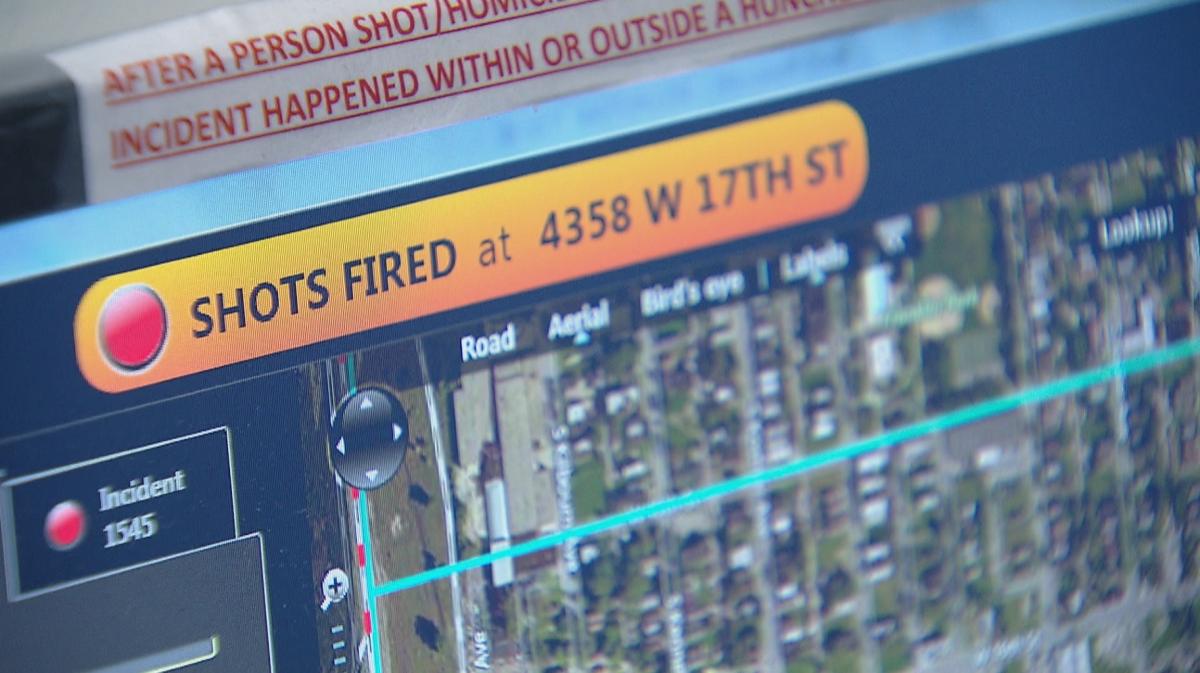
A key city panel ratcheted up the pressure on Mayor Brandon Johnson to replace the city’s controversial gunshot detection system, which he scrapped two years ago.
Chief Procurement Officer Sharla Roberts told the Chicago City Council’s Public Safety Committee on Tuesday that officials are still weighing the bids submitted by nine firms, including one by SoundThinking, the firm that operates ShotSpotter.
Roberts repeatedly told the committee that she and her staff were “working diligently” to bring the nearly 19-month effort to negotiate a new contract to a successful end — but declined to say much more, citing the need to keep the discussions confidential.
Roberts did not tell the increasingly exasperated alderpeople how long the process is likely to take — even as the city prepares for the summer months, when violence typically spikes.
“This was a total waste of time,” Ald. Nicholas Sposato (38th Ward) said at the end of the hearing, which lasted more than an hour.
Ald. Brian Hopkins (2nd Ward) said he would hold another hearing on the effort to replace ShotSpotter on June 3 to give alderpeople another chance to “get answers.”
Led by Ald. Peter Chico (10th Ward), a former Chicago police officer, critics of the mayor took turns attempting to put Roberts on the hot seat, peppering her with questions about whether Johnson was really committed to replacing the gunshot detection system that he derided as no better than a “walkie-talkie on a stick.”
Several alderpeople said during the hearing they remain convinced that the system of microphones that sent an alert to police officers every time the system picked up suspected gunfire was a vital tool for the Chicago police, since so many shootings are not reported to 911.
During 2025, the first full year without a gunshot detection system, the number of Chicago homicides hit a 60-year low.
Chicago’s homicide rate dropped by approximately 29% in 2025, as compared with 2024, according to Chicago Police Department data. The city’s overall violent crime rate decreased by nearly 23%, according to CPD data.
In addition, the 12 South and West side neighborhoods that had ShotSpotter sensors recorded an approximately 32% decrease in homicides in 2025 as compared with 2024, according to an analysis of Chicago crime data by Rob Vargas, a sociology professor at the University of Chicago who leads the UChicago Justice Project.
Since the beginning of the year, homicides are up 6%, and the overall violent crime rate has dropped more than 8%, according to CPD data.
The City Council twice rebuked Johnson over ShotSpotter and demanded that he reverse his decision to scrap the system, which he has said leads to the overpolicing of neighborhoods home to a majority of Black and Latino Chicagoans.
The City Council attempted to give Chicago Police Supt. Larry Snelling the power to bypass the mayor’s office and directly ink a contract with SoundThinking, the firm that operates ShotSpotter. Snelling supported the use of the system, but did not openly defy the mayor, who appointed him and has the power to fire him.
Snelling and other supporters of the gunshot detection system said it helped officers save lives when shootings were not reported to emergency services.
ShotSpotter was never used to dispatch paramedics.
Johnson has repeatedly said there is “clear evidence (ShotSpotter) is unreliable and overly susceptible to human error.” He blamed the system for the death of 13-year-old Adam Toledo, who was shot and killed by a Chicago police officer responding to an alert from the system in March 2021.
Johnson said there was no evidence that ShotSpotter lived up to promises that it would reduce gun violence.
Under fire, Johnson’s administration agreed to consider proposals from firms to use technology to “ensure quick response by law enforcement authorities in emergency situations.”
City officials required gunshot detection systems to cover the entire city of Chicago and be able to report “incidents” to police with positional data within 60 seconds, with 95% accuracy, to help the city “improve detection of violent crime, expedite response times, improve the likelihood of obtaining forensic evidence and speed up medical response and first aid for victims.”
The city’s 2026 budget includes $5 million for “software maintenance and licensing” as proposed by the mayor that could be used to fund another contract with SoundThinking or another firm to provide a gunshot detection system.
That is less than the $9 million the city set aside in its 2025 budget for a ShotSpotter replacement, records show. It is unclear whether a gunshot detection system exists that meets the city’s specifications.
Johnson said Feb. 18 he would not ink a new contract until officials could “find something that works” while continuing to focus on what he said has proven to reduce crime in Chicago, like reopening mental health clinics, building affordable homes, improving public education and helping detectives solve crimes and get illegal guns off the street.
“The things that are working, we’re going to double down those efforts,” Johnson said. “And then, of course, we’ll still have conversations about, you know, ways in which we can solidify their work along the edges.”
Any decision to re-implement a gunshot detection system in Chicago would come after the city agreed to pay $90,000 to resolve a lawsuit filed by the MacArthur Justice Center, a nonprofit civil rights organization in Chicago.
That suit alleged the city used ShotSpotter alerts as a pretext to stop and search Chicagoans near the alert without other reasonable suspicion or probable cause, records show.
Chicago taxpayers will pay $500,000 to resolve a separate lawsuit filed by a man who was charged with a murder in 2020 based on an alert from ShotSpotter, according to court records.
WTTW News coverage of policing and police reform is supported by The Joyce Foundation.
Contact Heather Cherone: @HeatherCherone | (773) 569-1863 | [email protected]